Wednesday, 18 March 2020

Image result for flipped

This was an audio read - actually my daughter read it to me. This was a book she had read in 7th grade and we decided to take turns selecting books to read together. 

What a charming read! Plus much of it we read together while on an overnight camp trip to Malibu. Great setting to share a story. 

The characters are vivid and simple events are poignantly portrayed. Julie nurses a childhood crush for Bryce who scorns her attention for years. Suddenly in their early teen years she begins to question his character and turn away from her interest in him. He, however, discovers that he can't keep his mind off of her. 

The chapters alternate between the perspectives of these two characters. Adorable! It is not just a romance. There is growth and development of other characters in the story and how the familial relationships are contrasted. 

It also explores how handicapped people are perceived in society as Julie discovers that she has an uncle who has special needs. 


Friday, 6 March 2020

February Book Club Read


This was a really unique read. The author is Swedish and very unorthodox. The story is written in third person but from the perspective of a precocious seven year old girl. Her parents are divorced and caught up in high profile careers and new partners. Her mother is expecting a new baby with her stepfather. Right away the reader is impressed that her grandmother has become the main influence and ally for the girl. 

The grandmother is a true character full of impetuous mischief. Her relationship with her own daughter is fraught with angst. She is the rule bender and breaker and her daughter is portrayed as the classic control freak. (The reason for the extreme character contrast is revealed as the story begins to unpack everyone's back stories.)

The grandmother has invented a fantasy world and taught her granddaughter a secret language which seems to be a code for understanding people and navigating in a difficult world. It becomes a sort of refuge for the little girl who experiences bullying at school from other children. 

Tragically the grandmother dies of cancer. Elsa (the granddaughter) becomes the bearer of letters of reconciliation her grandmother wrote to people with whom her relationship had become strained and frayed. Through this process of distributing letters, understanding and healing begin to take place among this small community of families and neighbors who share an apartment complex. 


3 Condensed Novels - a mysterious inheritance, native integration, unrequited love

The following titles are all from a Readers Digest Condensed Version passed on to me from my Grandma and Mom. This volume contained more stories, but I only read these three. The other stories looked like they were about WWII and I'm not so much into war stories, unless they are peppered with enough drama and romance.

The Tilsit Inheritance - Catherine Gaskin
   A strange tale about a young girl living in the Caribbean who discovers her father's mysterious past linked to a family property and business in England that made beautiful china. The story is full of mystery and slowly unravels as the story progresses. Young Ginny ends up back on the estate after the strange death of her aunt. Turns out the aunt had tried to manipulate everyone into doing her bidding and the whole estate seemed to have a sinister yet binding magnetism. In the end, Ginny discovers the secrets and in one bold move leaves the craftsman she had fallen in love with and returns to the island home of her childhood, where another man awaits.


When the Legends Die - Hal Borland
   This story is right up my alley because it captures the life of a man trying to integrate two worlds: that of his native Ute heritage and that of a "modern" man (story is set in early 1900s I believe.) At one point in his childhood, his mother leaves the small Colorado town where they had been living,  and takes her young son to the mountains to live in "the old way." She teaches her son how to live off the land and weave baskets. She dies an untimely death leaving him to fend for himself. Thankfully she taught him well and he is able to survive. He makes friends with a bear cub and trades in his beautifully woven baskets to a kind store owner who gives him supplies. The young boy is betrayed by a tribal member who takes him to an "indian school" in exchange for money. There they try to strip him of his heritage and anglicize him, as was the practice of the day. His pet bear follows him but is injured and driven away. This marks the end of his childhood.
   Thus his adult life is permeated with rage which he channels into bronc riding on the rodeo circuit. He becomes famous for his ruthless bronc riding. Midway through his career he leaves his mentor who more or less exploited him, and goes out on his own. At one point he becomes severely injured and his convalescence forces him to come face to face with himself.
   Once he he can function, he returns to the region of his childhood to work as a sheepherder. There in the mountains he remembers his heritage. He has an encounter with a bear - the implication being that it is the same bear that was once his pet.  Through living in the wild, he is able to re-integrate his native heritage, "He had had a long journey; the long and lonely journey a man must take when he denies his own past, refuses to face his own identity.....he was a Ute, an Indian, and nothing would ever change that."


The Battle of the Villa Fiorita - Rumer Godden

Just finished this one! This is the second book of hers I have read (RDCV) I don't think I documented the other one - about a convent in England. I love her writing! This one is a fascinating exploration of the culmination of divorce. A well established middle aged housewife in England falls in love with a movie director who happens to be in her neighborhood filming. I think this is post WWII. She's kind of the classic overlooked relatively happy woman whose military husband travels a lot and whose 3 school age children are conveniently away at boarding school - recipe for disaster and drama. All of a sudden she catches the interest of this tall dark and handsome stranger who pursues her. She feels beautiful and alive like never before.

They end up running off together to a villa in Italy. (on a sidenote the villa is on Lake Garda which happens to be near where I used to live so it made it easy to imagine the setting, the people, and the towns which I have actually visited!)

They are caught up in a love world all their own. Just when you think you know where the story is going, two of her kids show up to disrupt the scene. The author does such a great job of not vilifying anyone here. She really captures the agony of the tension the protagonist feels between the pull of falling in love and the reality of family, stability, and the happiness of her children. The kids journeyed solo to Italy from England to bring their mom back.

The kids end up staying for several weeks. They bond with their mom's fiancee to a degree but also feel all the resentment and outrage of their father and the disruption this has caused in their lives. Rob (fiancee) brings up his daughter from previous marriage.)

Ultimately the tension reaches a climax  - all the complexity of the situation is fully expressed. Just when you think the tenacity of their attachment will win, the protagonist realizes she is not pregnant as she had suspected. A scary boat accident where two of the children almost drown - brings her home to reality. The story ends with her returning broken hearted yet resigned to London to try to patch up her marriage and restore their family to order... The children have won, hard won victory...

Monday, 24 February 2020

More shedding


Living+For+A+Living+Pic.jpg


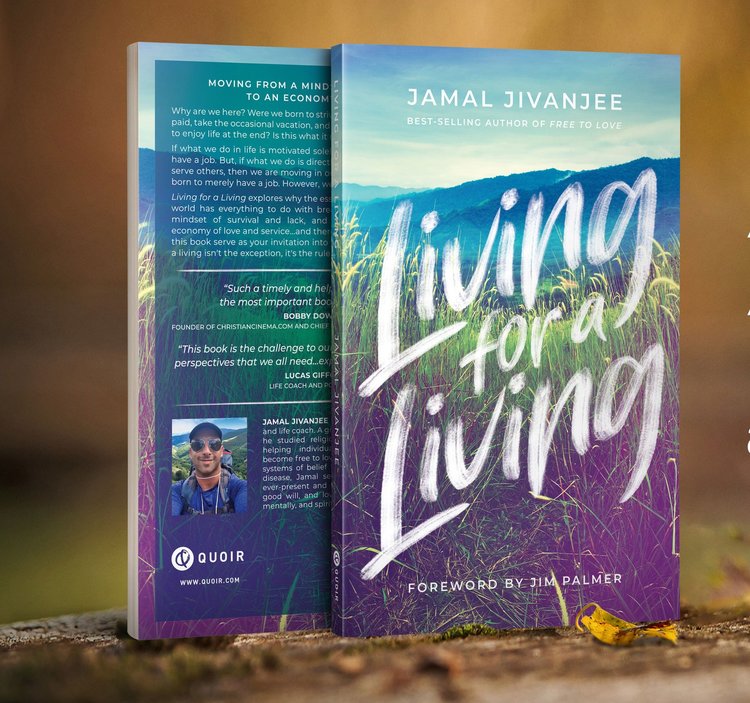
This weekend finished Jamal Jivanjee’s book Living for a Living.  My friend Emilee sent this to me and I'm so grateful. Because of her recommendation, Nick and I read it together which took us a while as we squeezed in a chapter here and there. 

It really tied in with a lot that I’ve been thinking about in terms of unschooling and shedding even more of the arbitrary restrictions placed on us by society and culture. He does a good job using examples and real life dialogues to drive home his point, which is basically about
-       Being alive to the present
-       Awareness about western cultural strongholds re: materialism, workaholism, and the idolatry of self-reliance and individualism, and global beliefs in scarcity.
-       He refers to Jesus often but doesn’t throw in random out of context scripture passages in an annoying way

I struggled with this book because I love individualism and self-reliance. I do rely on others but I am fairly uncomfortable with it. It was good to examine that a bit. It has negatively affected me in the past. Like all things, we have to be careful not to throw out the baby with the bath water. There are many good things about self reliance and working hard and elements of our cultural heritage. We have to carefully integrate these ideas. 

I felt like the voice of cynicism was really alive in me as he talked about pursuing dreams and so forth. I also feel like it’s a needed call. Working hard can be a good thing. We also have this one short life to live out on a beautiful earth. I often think of Thoreau’s famous quote “most men lead lives of quiet desperation.” It’s a favorite of mine because I’d rather risk losing my security rather than losing the chance to live a life full of meaning and beauty. I think it’s important to differentiate between pursuing meaning and pursuing sheer pleasure and happiness which is a slippery slope.
This was really interesting. I kept thinking about the uncertainty part. Perhaps that’s what’s missing in my life. As I was hiking with my husband in the desert, I really wanted to go down a rocky ravine in which I didn’t know if it would lead us out to the bottom of the canyon safely. Part of the attraction (besides scrambling over sharp rocks) was the NOT knowing.
Because of these needs, sometimes we embrace substitutes that seem to meet these needs, even if they truly don’t. These become addictions. This is something I want to talk about with my kids, particularly my high schooler. This is what I want to impart not: Biology, Geometry, honors English, Physical Education, elective, elective which is what the culture tells her she should be spending 70% of her time doing.
What will you do with what you’ve been given right now?
Will you appreciate the beauty of all you’ve already been given, or will you pursue an illusion of what you think you lack?
This last section struck a chord. I’ve spent seasons of my life where I became so fixated on obtaining something or someone that I ceased to enjoy the present season at all.


Emotionally Charged


Image result for secret life of bees
This was a re-read. I believe I read it some years back. I just joined a book club and this was our first book for the month of January. New Year, new book club, first book.

This is totally a delightful read. Full of unexpected words, sensations, and happenings. Poetic. Our discussion was really personal and emotionally charged. It was like an enneagram 4's elixir of life. 

Monday, 27 January 2020

Ramona at the lovely San Antonio Mission

 San Antonio Mission
annual: Cutting of the Roses 
My adapted version of Ramona has been in the gift shop for several years thanks to the vision of Frankie Grau who runs the Gift Shop and values the historical contribution of Helen Hunt Jackson the original author of the story.  

I want to thank my family for coming to this event with me, especially my husband (not shown here unfortunately) who made it happen by driving, getting up early, packing lunches, and being super supportive!

Ramona can be found here: Ramona on Amazon


Friday, 10 January 2020

Tools for the iceberg under the surface

The Whole-Brain Child audiobook cover art

My friend Emilee got me this book. It was an interesting read. I wish I would've read it when my kids were smaller and those mysterious tantrums were a part of my weekly life. I think understanding brain development is one of the new frontiers of our era. Such language as the upstairs/downstairs brain, integrating the left and right, making the implicit explicit, the wheel of awareness - (being the conductor of your own thought life.)

The tools outlined in this book with short comic strips as well as engaging stories, are applicable to anyone - whether they're parents or not. The ongoing work of being aware of our own processes so that we don't sabotage others is something I definitely want to continue to embrace.