Sunday, 5 May 2019

More Kindred Spirits of the Earth - O Pioneers

Image result for o pioneers


I had picked up O Pioneers casually. It had been collecting dust on my nightstand for quite some time. I think I picked it up at Book hounds. I had read My Antonia as a girl, and it had made a huge impression on me. I identified with how her characters were in love with the soil. I’m not a farmer and I’m not drawn to the science of growing things nor am I naturally adept at it, but I love the earth itself. I love the smell of the earth in early summer and the musky after rain dirt smell. I love the feel of the earth in my hands while planting my mom’s garden for her. I identified with how Antonia felt empowered by her outdoorsy manual labory strength that she acquired from her toil on the farms. I too liked to admire my muscles and felt scornful of people who were pasty and frail.
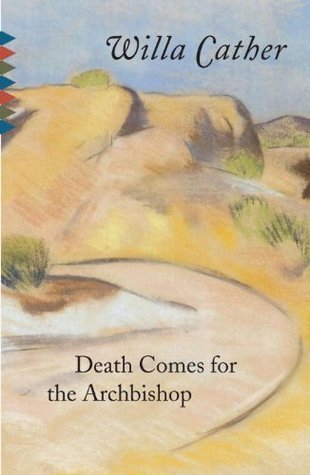
Last summer I read Death Comes to the Archbishop
I don’t know how she does it -but she gets into the skin of these different characters and is able to express these timeless and universal human emotions in a way that is both powerful and artful. She was a feminist before her time and I love her strong female characters although the character I most identify with in temperament is Carl Lundstrom -Alexandra’s sensitive intuitive childhood friend who goes away to the city only to return into her life years later, somewhat jaded by life but still a kindred spirit. Alexandra manages to be a kindred spirit in her solid steadfast way.
 Alexandra takes the lead at the beginning of the story, taking over the business where her pioneering father leaves off upon his deathbed. He entrusted his plans not to the dull son  or insipid son but to his enterprising and intelligent daughter, who manages to see what others cannot and over time turns their struggling farm into a prosperous industry.
The climax of the story unfolds as Alexandra hits middle age and lights on the sweet friendship turned romance of her younger brother Emil with their married neighbor Marie, who has become Alexandra’s new best friend in Carl’s absence and is one of those beloved characters that is irresistible to the book characters and the reader alike. Bohemian Marie, who is full of life, sweetness, and vitality has got herself married to a whiny lump of a man – one of those who seemed dashing and swashbuckling but who lacked the kind of substance for husband material and turns into a self serving piece of lichen who finds it impossible to love another human being – especially one who is determined to be happy where he is determined to be unhappy.
You get it. It sets the stage for blossoming forbidden love. Plus Alexandra realizes too late, she kept sending Emil over to do things for Marie that she knew her husband wasn’t doing – by that I mean fixing things around the place – not to be unclear here. Ha!
There are a lot of other interesting side dynamics that take place that really capture small town life and friendship and family dynamics in rural America – the conflux of cultures: Bohemian (which means Czech in early Nebraska), German (Carl), old Ivar (the simple animal loving man who is Alexandra’s friend and whom she cares for), Swedes and Norwegians (she is Swedish.) Sidenote: Cather grew up in Nebraska. She knows what she’s talking about here. She lingers a bit on the difficulty of family dynamics in business relationships with the land. Her brothers come back to try to threaten and one up her – this kind of ends the civility that had tenuously existed prior to that point. They pretty much tried to dismiss the integral role she’d had in saving and furthering the farms, claiming that because they had done most of the physical labor, she should basically take a back seat in the business. She calmly refuses. You go Alexandra!!!
Emil and Marie struggle to resist their connection, but the deal is sealed when the lights go out at the party and she ends up in his arms.
He resolves to leave and they meet one last time to say goodbye in the orchard, where as luck would have it enraged armed husband finds them and down they go only to die side by side.
This twist of fate offers one great opportunity to Alexandra. Her grieving has reduced her to a state where she actually needs Carl. Since he was so poor he had been too proud to ask her to marry him, but now, in her hour of need, he returns from Alaska to comfort and rescue her emotionally. He hopes his business venture will be profitable so now he feels manly enough to marry her.
Alexandra visits Frank (jealous husband) in prison and expresses her forgiveness to him. She feels that she understands his rage more than she can understand how Emil and Marie could’ve fallen in love. She’s actually more angry at Marie for being a life wrecker. In the end, Carl helps her to see that: “I’ve seen it before. There are women who spread ruin around them through no fault of theirs; just by being too beautiful, too full of life and love. They can’t help it. People come to them as they go to a warm fire in winter.”
Favorite quotes:
of Marie: “The years seemed to stretch before her like the land; spring, summer, autumn, winter, spring; always the same patient fields, the patient little trees, the patient lives, always the same yearning, the same pulling at the chain – until the instinct to live had torn itself and bled and weakened for the last time, until the chain secured a dead woman, who might cautiously be released. “
“treasure of pain,”
Of Carl: “He had not become a trim self satisfied city man. There was still something homely and wayward and definitely personal about him. Even his clothes, his Norfolk coat and his very high collars, were a little unconventional. He seemed to shrink into himself as he used to do; to hold himself away from things, as if he were afraid of being hurt. In short, he was more self-conscious than a man of thirty-five is expected to be…..he was intelligent, sensitive, unhappy.”


Friday, 26 April 2019

Tomboy, independent, bookish, sarcastic, tenderhearted, Native American - how could I not love it! Barbara Kingsolver's The Bean Trees


Image result for the bean trees

This books was a delightful read. There's something about BK's Kentucky roots and eventual pilgrimage to Arizona that I resonate with. I love her conversational writing (mostly first person in this one). There is humor, humility, and heart wrenching characters. She manages to weave these social justice touchpoints into a wonderful narrative. 

The friendships that evolve between a young Kentuckian and two Guatamalan refugees is totally charming. She encounters Lou Ann - a single mom who is given a chapter of her own to set the stage - a fellow Kentuckian and single mom. Their friendship is beset by mutual counseling, laughter, and sister-parenting. The protagonist, leaves her tiny Kentuckian town in a beat up old car, and changes her name,  determined to avoid pregnancy and poverty, along the way she acquires a Cherokee baby that is handed off to her as she passes through Oklahoma. She nicknames the baby "Turtle." The baby who has undergone deep trauma is transformed from a muted numb creature into an animated child through the love and care of Taylor and her community. 

Taylor meets Mattie at "Jesus is Lord Used Tires." Mattie is a mother figure and eventual employer to her and activist for the refugee community. Taylor falls for her Guatemalan friend Estevan whose wife is just beginning to emerge from an emotional abyss. She reigns in her feelings to do what is right, as does he. The connection is subtle and developed without sappy drama. 

"Jesus is Lord Used Tires" and the "1-800-the-Lord" call number offer a gentle satire of the market driven evangelical movement of the latter half of the 20th century, particularly in the Bible Belt. She eventually calls the number out of curiosity, only to have a sarcastic exchange with the operator who is conscripted to collect financial pledges for a televangelist. 

I'm drawn to BK's protagonists who seem to share a common thread: perhaps autobiographical? tomboyish, independent, bookish, sarcastic, yet tenderhearted - no wonder I love her stuff! Kindred spirits. 

Friday, 25 January 2019

Sad Missing Books

Over the past ten months I have read many books, some of them very good. Life happened and I didn't get to write about them. I want to document my standouts briefly here:

Image result for the glass castle
The Glass Castle - Jeannette Walls


I happened on this movie first on Amazon Prime and it blew me away so I had to read the book. I still don't know why this story moves me so much, but I love the characters and Jeannette's ability to integrate the challenges and joys of her unique upbringing.


Willa Cather - Death Comes for the Archbishop

Image result for Death of an Archbishop

I have been a fan of Cather since I read My Antonia as a child. I adored reading this book. Probably because New Mexico is calling to me. Again the intersection of Native American, Catholic Europe, and manifest destiny here - fascinating and something I've been pondering since my Ramona project.

Recent Nonfiction wrap up

Last Child in the Woods - Richard Louv
Free to Learn - Peter Gray

I just wrapped up Free to Learn. I had read Last Child in the Woods in the fall.  Before I crack open another nonfiction, I thought I would jot down some thoughts for the sake of my own synthesis.

The first thing that comes to mind is that it's difficult to simulate a hunter/gatherer model in modern society. At best we play pretend to replicate that kind of tribal life, play, and learning. Replicating this type of learning however, even if it misses my idealistic mark, is still preferable perhaps to the coerced factory model that the majority of our students and most of us have participated in for years. I pondered to my husband that in retrospect, adult life was a really difficult transition for me from the top down factory model school life that I had succeeded in for 16 years. It's almost as if I was always waiting for someone to pop out and tell me what to do, so I could do it and get the A. In the adult world, you may enter a company that is a top down model similar to factory school, but the rules may not be exactly the same.

If anything, a model that teaches kids to discover who they are, what they're interested in, how they lead, how they follow, and allows them to take risks and begin to live life as a real participant rather than incessantly train only to falter when they do enter the hallways of life, is a welcome concept.

Having awareness of the historical models of parenting that Peter Gray outlines was probably my favorite part of his book: trustful parenting (hunter/gatherer model), directive domineering (model instituted by the rise of agriculture and feudalism), directive/protective - current model views children as incapable and vulnerable.

As someone who has experimented with child led concepts since I read Continuum Concept when my kids were little, I think we have a lot to learn about different cultural concepts of child raising. I also realized that my small children would run out in front of cars if I did not sometimes hold their hands. I don't know if it was because I lacked "trustful parentingness" or if the dangers presented in our world are higher stakes experiments that don't allow children a proper progression of trustfulness.I also missed the presence of tribal support that I did not often find in my nuclear family oriented world. There were not a plethora of eight year olds or old grandmas around to hold my babies while I did....  I did allow them to free play without adult direction as much as possible.

The days of neighborhood roaming must have been great indeed. I didn't have a neighborhood, but I did do range roaming with siblings, friends, and cousins. Simulate away, until we figure out a better experiment, like a society where children are allowed to integrate, work, play, learn, and fully participate.

Tuesday, 15 May 2018

all over the map

I have had this blog for awhile now. At first I wrote about my cross cultural experiences living in Italy, my kids, some of my thoughts etc. Then I decided that was too personal and vulnerable and I removed them all from here and reverted them to drafts.

I revamped the blog in 2017 and made it about the books I'd read which reads like a school assignment - only with worse grammar and much funnier.

I don't want to spill all like some bloggers, although reading about other people's stuff can be interesting and make you feel better (or worse) about your own.

I also feel guilty blogging because I hate reading other people's blogs. (not hate, just don't take the time. If have time to read I prefer a book.) I felt it would be inauthentic and unfair for me to blog when I don't take time to read other blogs. It's like having a conversation where you do all the talking. 

I have been listening to Elizabeth Gilbert's podcasts about the creative process, based on her book Magic Lessons. They've been fun in a lot of ways. They also helped me to realize how much I long to share my writing, and how afraid I am of sharing my writing. It's so much safer to not convey. I can have a pristine face for the world to see. What if someone catches a glimpse of me through my art? What if they laugh? Liz would say "What if they do? They're probably laughing at you anyway, giving you flack, or most likely not thinking about you at all. And if you put yourself out there they might despise you, like you, or love you for like one minute and then they won't be thinking about you again."

I guess this is me giving myself a pep talk on a public forum (That no one reads because I don't promote haha.)

So I might be doing more writing, about writing, the creative process and maybe my forays into sharing more. I might retreat again after experimenting, but life's too short not to grow and not to experiment, and not to risk disapproval for something.


Monday, 26 February 2018

The Silent Library Books


I have a confession to make. I check out lots of library books and do not read them. I actually check them out, studiously enter their due dates in my calendar (even setting a reminder to sound off in time for me to return them), and THEN I renew them. Repeatedly. Until one of two things happens: I incur library fees, those loathly accountability shame-mongers that I despise (because I despise a free public lending library becoming a paid attraction because of MY ineptitude); OR, I despair of reading them and return them. Never mind that the librarian doesn't know I haven't read them. I know I haven't read them.

So, instead of reading one of these charmers right now, I'm writing about not reading them, because apparently that might be more fun


Just take a look at these titles. Reduced Shakespeare: The Complete Guide for the Attention-Impaired [Abridged]...skip to the bottom--What Jane Austen Ate and What Charles Dickens Knew: From Fox Hunting to Whist -- the Facts of Daily Life in 19th Century England,  and my favorite title of all (move up a row), Break, Blow, Burn: Camille Paglia Reads Forty-three of the World's Best Poems. Who wouldn't want to read a book that says "Break, Blow, Burn" in caps-lock on a hot pink cover???

*Sidenote--All, I repeat, ALL of the picture childrens' books which I dutifully check out for my daughter GET READ. By her, by me, by us, together or apart. Why is it that I do not permit myself the pleasure (or the discipline--ah! that might be more to the point) of reading the oh-so alluring biblia which have attracted me enough to go to the trouble of checking them out, lugging them home, trying to not be overdue in returning them, and risking failure at the aforementioned life skill? (I also cyclically check out hoped-for reads of chapter books for my daughter, ostensibly for me to pre-read, but alas, here I also fail to read most of them).

Back to the original question--Why do get so many "free" books, renew them 3-5 times out of their 9 renewal lifespan, and return them either overdue and unread or on time and unread? Not sure (lack discipline is not fun to admit, but probably the truth), but a gratifying little discovery emerged about this topic after riffing on this theme with Zona... The power of community. That is my rescue rope. After discussing my issue with my friend and getting a good laugh out of it, I actually picked up the Reduced Shakespeare and plunged in. The friendly sarcasm has me stifling a smile about every paragraph or so. Not my usual fare, but it makes the material fresh, plus I'd like to brush up on Shakespeare a bit, and this looked a fun way to do so.

I also broke open the first book in the Infinity Ring series, which I checked out to pre-read it to see if it might be worth recommending to my son to read. I had learned that Michael de la Pena authored a later book in the series, and since I enjoyed his illustrated children's book, LOVE, I thought I'd give the series a go. (Apparently they are authored by a variety of writers. Interesting.) It's a time-travel book which goes back into history to save the world. The parents are involved, and in the first ten chapters or so, the disrespect so casually paid to adults in general was minimal. Yay. I don't know if I'll finish it, because I would actually prefer to read more grown-up syntax and diction and to be carried along more sophisticated themes than this one has; however, I've appreciated the exposure to the book as a window into some reading at my kids' level.

Despite the genuine kick I've gotten out of writing about the books I've checked out from the library,  I sincerely hope that I'll spend a few more half-hours reading them instead. 

This moment of truth was brought to you, with a chuckle, by Emilee Weeks Ames. Thanks for reading.


Saturday, 24 February 2018

Mary Austin


I really want to be kind here because this woman had quite a hard life. Father died, several siblings, died, and she was treated indifferently by her mother who hero worshipped her oldest son. 

I really wanted to like this autobiography. Land of Little Rain was pretty interesting if disjointed and mystical in expression.

The hardest thing about this was the way she referred to herself in the third person and then would occasionally revert to the first when things got emotionally intense.

Her perspective about her childhood in the post civil war Midwest was the most interesting part - also her pioneering days in this area (Kern County).

The whole theme of the book was a manifesto about her being a someone. To me, when a person goes out of their way to outline their accomplishments and lists all the influential people that they met even briefly, it is indicative of a deep cavity within that feels unrecognized. This makes sense in light of her father's early death and her mother's total lack of affirmation or recognition for the gifts of this bright unique woman. Her husband also was stuck in a time capsule and had no vision for her contribution. They eventually went separate ways.

I think Mary's encounter with Indian culture is what most fascinates me. It spoke to her at a deep level and helped bridge the gap between her convention loving Midwest upbringing and her creative spirit - also how to connect with God outside of organized religion. Perhaps this is where she and I meet. I've never had a direct connection with an indigenous culture (sadly) - perhaps my visit to a Oaxacan village in southern Mexico would be the closest thing - but it was superficial at best. However, I do encounter God best outside of organized religion though I'm not against religion, persay. This is one of my favorite passages from Earth Horizon: "There was a small campody up George's Creek, brown wickiups in the chaparral like wasps' nests. Mary (why not just say I?? - oh maybe she hoped someone would have written her biography and no one did so she wrote it herself.... ooohhhhh). Mary would see the women moving across the mesa on pleasant days, digging wild hyacinth roots, seed gathering, and as her strength permitted, would often join them, absorbing women's lore, plants good to be eaten or for medicine, learning to make snares of long, strong hair for the quail, how with one hand to flip trout, heavy with spawn, out from under the soddy banks of summer runnels, how and when to gather willows and cedar roots for basket making. It was in this fashion that she began to learn to get at the meaning of work you must make all its motions both of body and mind. it was one of the activities which has had continued force throughout her life. 

I also liked her description of her artists' colony in Carmel. They were a band of nature worshippers - sense seeking through outdoors stimuli. I can relate to that pursuit. I try not to worship it though, the creator doesn't like it. He likes to be celebrated through his creation. He does like it to be appreciated. Am I too brazen, speaking for him? I'm just too lazy to profess it as my opinion. It is my opinion. 

At one point, she confesses that she really missed out on being cared for by a man. I thought that was interesting. She associated with and admired women who were  at the forefront of feminism - she herself lived an unconventionally independent life for a woman of her day, yet felt that there was an intrinsic role that she was not privy to.